
How to Wash a Wooden Cutting Board Safely and Effectively
Wash a wooden cutting board by hand with warm water and a small amount of dish soap right after use, scrubbing both sides with a sponge or brush, then rinsing well and standing it upright to air dry. Avoid soaking the board or running it through a dishwasher — see our butcher block care guide. Avoid soaking the board or running it through a dishwasher, since prolonged water exposure can cause warping, cracking, or splitting over time.
⚡ The TidyFormula™ Quick Decision
Best approach: Hand-wash promptly with warm water and mild dish soap, scrub both faces and edges, rinse thoroughly, and dry the board standing on its side so air can move around it.
Use caution with: Any soaking, dishwasher cycles, or heavy water exposure, which can loosen glue joints on multi-piece boards and lead to warping or cracking in solid wood.
Stop and reassess if: You notice deep splits, persistent warping, mold-like discoloration, or a board that no longer sits flat on the counter—these are signs it may be time to retire the board rather than continue using it.
Why Wooden Cutting Boards Need Different Care Than Plastic
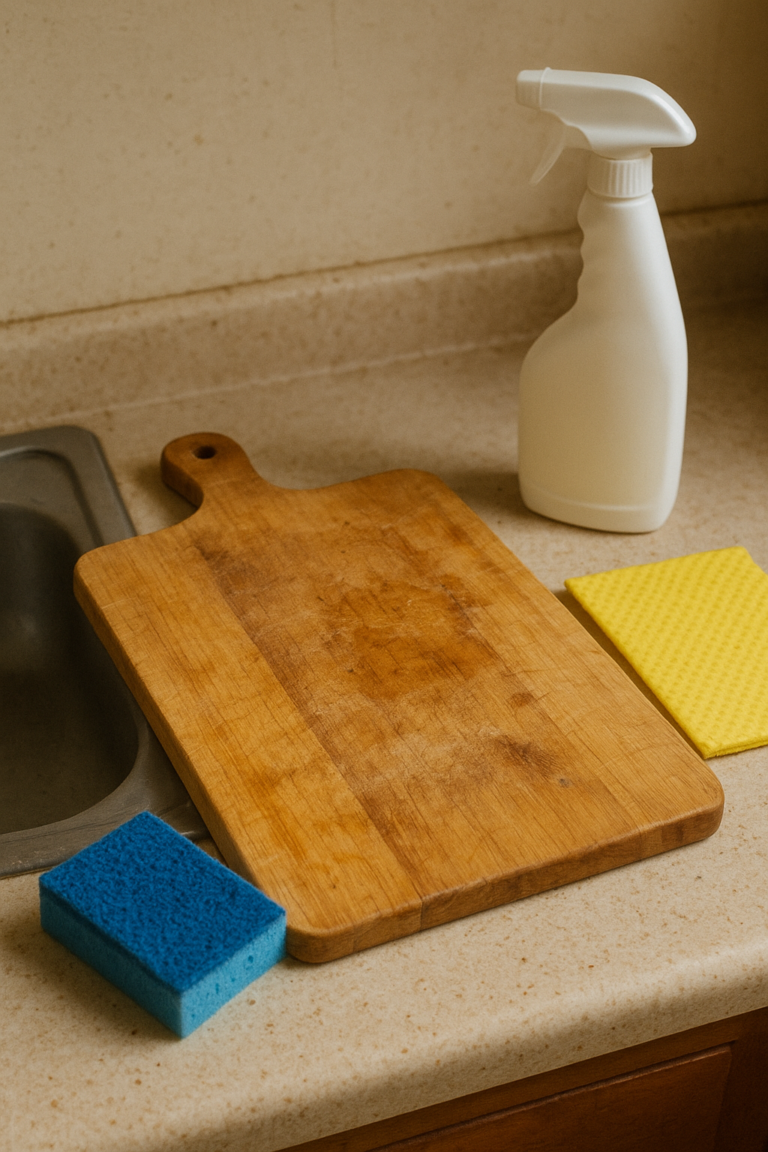
Wood is a porous, absorbent material, which makes it behave very differently from plastic or glass cutting boards. Water that sits on or soaks into wood can cause the fibers to swell and then contract as they dry, and repeated cycles of this can lead to warping, cracking, or separation at glued seams. This is why the general guidance for wooden boards centers on quick washing and thorough drying rather than soaking or extended submersion.
What I Use For This Job
Using the right tools saves time and protects your belongings. Here are my exact recommendations:
*As an Amazon Associate, TidyFormula earns from qualifying purchases.
Different types of wood and different board constructions can also respond differently to moisture. A thick, solid-wood board may tolerate brief water contact better than a thin board or one made from multiple glued strips. If your board came with any care instructions from the manufacturer, those instructions should take priority over general guidance, since manufacturers may have specific recommendations based on the wood species, finish, or construction method they used.
Step-by-Step: How to Wash a Wooden Cutting Board
- Scrape off food debris. Use a spatula, scraper, or the edge of a knife to remove larger food particles before you start washing. This reduces the amount of scrubbing needed and limits how long the board sits wet.
- Wet the board with warm water. Run warm water over both sides briefly rather than filling a sink and letting the board sit submerged.
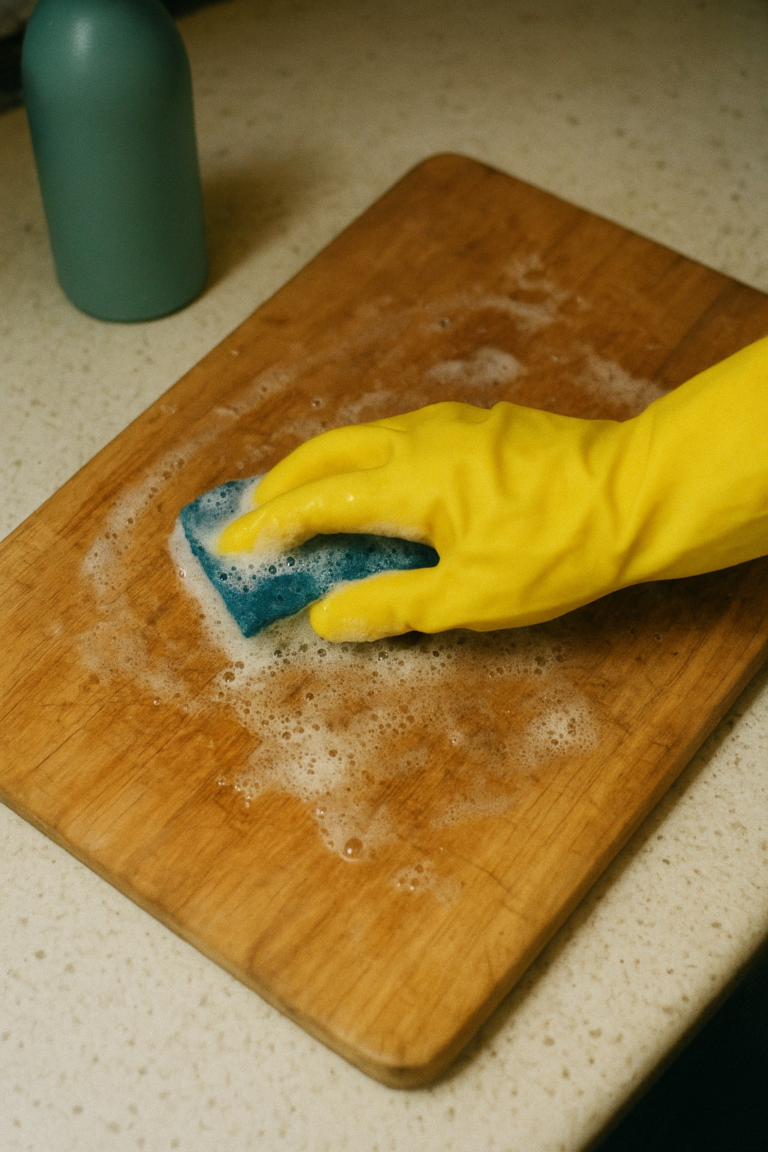
- Apply a small amount of mild dish soap. Work it into a sponge, dish brush, or cloth rather than pouring soap directly onto the board, which can make rinsing take longer.
- Scrub both sides and the edges. Pay attention to any knife grooves, seams, or handle cutouts where food residue can collect.
- Rinse thoroughly. Make sure no soap residue remains, since leftover soap can affect the taste of food prepared on the board later.
- Wipe off excess water immediately. Use a clean towel to remove standing water from both surfaces before setting the board to dry.
Drying a Wooden Cutting Board the Right Way
Drying matters as much as washing when it comes to wood. Standing the board upright, ideally in a rack or leaning against a wall with air able to reach both sides, helps moisture evaporate evenly. Laying a wet board flat on a counter or leaving it in a sink can trap moisture against one surface longer than the other, which may encourage uneven warping.
Avoid placing a wooden board near direct heat sources such as a stove, radiator, or in direct sunlight to speed up drying. Rapid or uneven drying can sometimes contribute to cracking, so allowing the board to air dry at room temperature is generally the more cautious approach.
Dealing With Odors, Stains, or Stuck-On Residue
For boards that pick up odors from strong-smelling foods like garlic or onion, some people find that a mixture of baking soda and water applied with a cloth and then rinsed off helps freshen the surface. For broader kitchen-odor strategies, see how to remove fish smell from the kitchen. If odors seem to be coming from the kitchen more generally rather than the board itself, you may also find tips in our guide to deodorizing a kitchen trash can.
For discoloration or staining, be cautious with abrasive scrubbing, since aggressive scrubbing can wear down the wood surface unevenly over time. If a stain persists after normal washing, light sanding may be an option for some boards, but this should only be done if the manufacturer’s care instructions support it, since not all finishes or wood types are suited to sanding. For stubborn food pigments, such as turmeric, check our advice on removing turmeric stains from countertops for approaches that can sometimes be adapted carefully to wood.
Should You Ever Use a Dishwasher?
Most guidance for wooden cutting boards advises against dishwasher use. The combination of prolonged water exposure, high heat, and drying cycles in a dishwasher can be more likely to cause warping, cracking, or joint separation compared to gentle hand washing. Always check the care label or manufacturer instructions for your specific board, since some manufacturers may have varying recommendations depending on the wood type or finish used.
Caring for the Wood Between Washes
Many wooden cutting boards benefit from occasional conditioning with a food-safe mineral oil or a board-specific conditioning product to help maintain the wood’s appearance and reduce the chance of the surface drying out and cracking. Frequency of conditioning can vary depending on how often the board is used and how dry your household environment tends to be. If your board came with care instructions, follow those regarding the type of oil or conditioner to use and how often to apply it, since not all oils are appropriate for cutting boards.
Avoid using cooking oils such as vegetable or olive oil for conditioning, as these can turn rancid over time. A product labeled specifically for food-contact wood care is generally the more cautious choice, and checking the label for suitability on cutting boards is a reasonable step before applying anything new.
When to Repair, Sand, or Replace a Wooden Cutting Board
Wooden cutting boards can last a long time with consistent care, but they don’t last indefinitely. Signs that a board may need attention include noticeable warping that keeps it from sitting flat, deep grooves or cracks that are difficult to clean, or persistent discoloration that doesn’t improve with washing.
Minor surface wear can sometimes be addressed with light sanding, provided the board’s construction and finish support that kind of maintenance. Deeper cracks or splits, especially near glued seams on multi-piece boards, are generally harder to repair reliably and may be a sign that replacement is the more practical option. If you’re ever uncertain whether a board is still in good working condition, examining it closely for structural issues before continuing to use it for food preparation is a reasonable precaution.
Simple Habits That Help a Wooden Board Last Longer
- Wash the board soon after use rather than letting food residue sit and dry on the surface.
- Avoid soaking the board in a sink full of water, even briefly, if you can help it.
- Dry the board standing upright with airflow on both sides.
- Keep the board away from direct heat sources like stovetops or dishwashers.
- Condition the wood periodically with a product intended for food-contact surfaces, following any guidance on the label.
- Store the board somewhere with reasonable air circulation rather than in a damp, enclosed space.
Following consistent washing and drying habits, along with occasional conditioning, can help a wooden cutting board stay functional and pleasant to use for years. Because wood species, finishes, and construction methods vary between manufacturers, checking any care instructions that came with your specific board is a sensible step whenever you’re uncertain about the best approach for your situation.
Everything Mentioned Above
Before you leave, grab the tools you need to get the job done right the first time:
*As an Amazon Associate, TidyFormula earns from qualifying purchases.