
How to Remove Coffee Stains from Clothing – Quick Guide (Stain Removal Tips)
Coffee stains respond best to a quick cold-water rinse followed by a targeted treatment with dish soap or a laundry stain remover, then a wash on the warmest setting the care label allows. The key is acting before the stain sets and avoiding hot water or the dryer until you’re confident the stain is fully gone, since heat can lock coffee stains in permanently.
⚡ The TidyFormula™ Quick Decision
Best approach: Rinse the stain with cold water as soon as possible, apply a small amount of dish soap or a dedicated laundry stain remover directly to the fabric, gently work it in, and let it sit briefly before washing according to the care label.
Use caution with: Silk, wool, and other delicate or dry-clean-only fabrics, which can be damaged by rubbing, soaking, or standard laundry stain removers — and avoid acidic home remedies on delicate fibers (see surfaces you should never clean with vinegar).
Stop and reassess if: The garment is labeled dry-clean-only, the stain has already been through a hot dryer cycle, or the fabric shows color changes, fading, or damage after treatment. In these cases, a professional cleaner is usually the safer option.
Why Coffee Stains Are Tricky
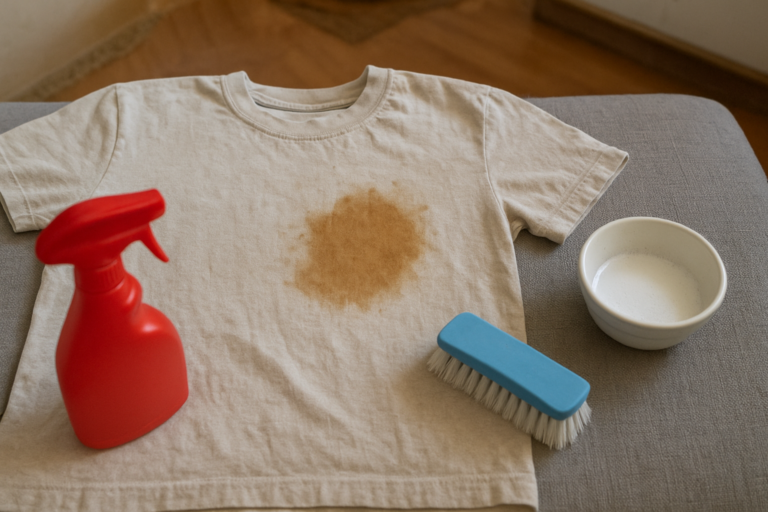
Coffee contains tannins, which are the same compounds that make tea and wine stains stubborn. Tannins bond to fabric fibers, especially natural ones like cotton and linen, and they become much harder to remove once heat sets them. That’s why washing or drying a coffee-stained item before the stain is fully out often makes the mark more permanent rather than less noticeable.
What I Use For This Job
Using the right tools saves time and protects your belongings. Here are my exact recommendations:
*As an Amazon Associate, TidyFormula earns from qualifying purchases.
What You’ll Need
- Cold running water
- Mild dish soap or a laundry stain remover
- A clean white cloth or soft-bristled brush
- Your regular laundry detergent
- Optional: an enzyme-based stain treatment for set-in stains
Step-by-Step: Removing a Fresh Coffee Stain
- Blot, don’t rub. Use a clean cloth to lift excess coffee from the fabric surface. Rubbing can push the stain deeper into the fibers.
- Rinse with cold water. Run cold water through the back of the fabric to push the stain out rather than through it. Avoid hot water at this stage, since heat can help set the tannins.
- Apply dish soap or stain remover. Put a small amount directly on the stain and gently work it in with your fingers or a soft brush.
- Let it sit. Give the treatment a short amount of time to loosen the stain before rinsing again with cold water.
- Wash as usual. Launder the item according to its care label, using the warmest water the fabric allows. If residue or stiffness appears after washing, see guidance on removing detergent buildup from clothes.
- Check before drying. Inspect the area while it’s still damp. If any trace of the stain remains, repeat the treatment rather than tossing the item in the dryer, since heat can make a partial stain permanent.
Dealing With Set-In or Dried Coffee Stains
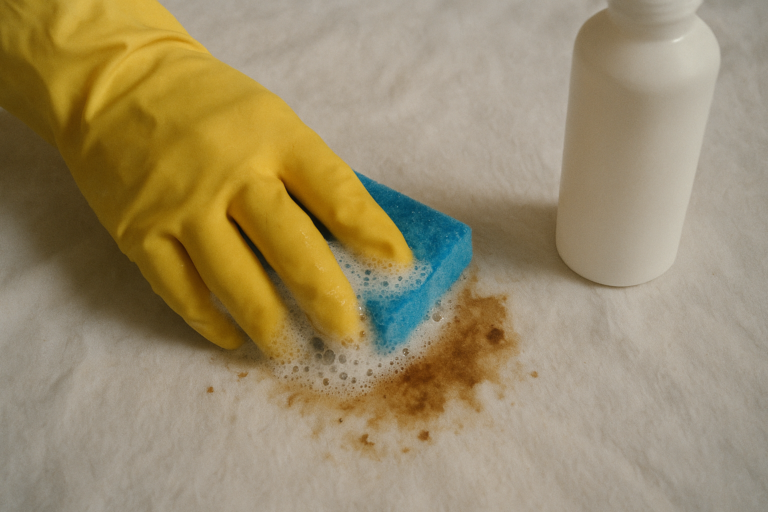
If the stain has already dried or been through the wash once without full success, an enzyme-based laundry stain treatment may help break down the residue. Apply it according to the product’s instructions and allow it to work before washing again. Older stains sometimes require more than one treatment, and complete removal isn’t always guaranteed, particularly on fabrics that have already been dried on heat. If the spill was on upholstery or area rugs rather than clothing, consult our guide on removing coffee stains from carpet for material-specific steps.
Coffee With Cream or Sugar
If the coffee included milk, cream, or sugar, you may be dealing with a combination stain. The protein in dairy can behave differently than the tannin-based coffee stain itself. Cold water rinsing still applies, but if a residue or ring remains after standard treatment, a second pass with a stain remover formulated for protein-based stains may be worth trying, following that product’s label instructions — similar methods are used for other protein stains like sweat or body oils (see tips for removing yellow sweat stains from pillowcases).
Fabric-Specific Considerations
Cotton and Linen
These fabrics generally tolerate cold-water rinsing, dish soap, and standard stain removers well, making the steps above a reasonable starting point. Always check the care label for any specific washing restrictions.
Synthetic Blends (Polyester, Nylon)
Synthetics often release stains more easily than natural fibers, but they can also hold onto oily residues from cream-based coffee drinks. The same cold-water and dish soap approach typically works, though you may want to double-check the wash temperature listed on the care label. For larger upholstery or fabric items (cushions, seat covers), see our advice on cleaning fabric office chairs for handling similar materials without over-wetting or damaging padding.
Silk and Wool
These fibers are more sensitive to rubbing, soaking, and certain stain removers. Test any product on an inconspicuous area first, and consider a professional cleaner if the stain is on a valuable or delicate garment.
Dry-Clean-Only Items
For anything labeled dry-clean-only, avoid home water-based treatments altogether. Blot gently to remove excess liquid, then take the item to a professional cleaner and point out the stain so they can treat it appropriately.
Drying and Aftercare
Air-drying is the safer choice while you’re still confirming the stain is gone, since machine heat can set any remaining trace permanently. Once you’re confident the stain has been fully removed, you can dry the item according to its care label instructions.
Preventing Future Coffee Stains
- Keep a stain-removal pen or wipe on hand for quick blotting when spills happen away from home.
- Treat spills as soon as possible rather than waiting until laundry day.
- Avoid setting a stained item aside for hot-water washing or drying until you’ve confirmed the stain is out.
- Consider a fabric protector spray for garments you wear frequently around coffee, checking the product’s compatibility with your fabric type first.
When to Consider Professional Help
If a coffee stain has already been heat-set, covers a large area, or sits on a delicate or expensive garment, a professional cleaner may have more effective options than home treatment. This is also the safer route for any item marked dry-clean-only, since home methods aren’t designed for those fabrics. For stubborn oily or greasy residues left by cream or flavorings, techniques used for upholstery grease removal can be informative; our guide to removing grease stains from a fabric sofa covers oil-lifting approaches that translate to some clothing situations.
Everything Mentioned Above
Before you leave, grab the tools you need to get the job done right the first time:
*As an Amazon Associate, TidyFormula earns from qualifying purchases.