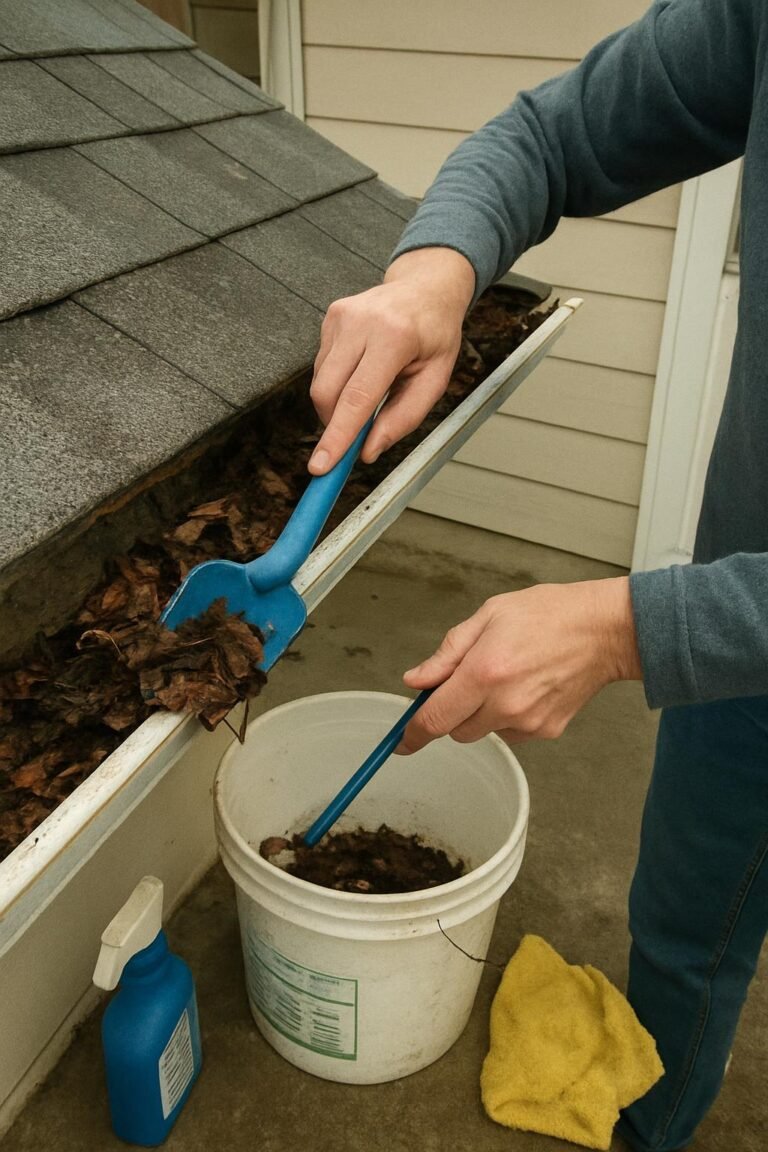
Cleaning Cement Patio: A Practical Guide to Scrubbing and Stain Removal
Cleaning a cement patio usually means sweeping away loose debris, applying a suitable cleaner or degreaser, scrubbing with a stiff-bristle brush, then rinsing thoroughly with a hose or pressure washer. The right method depends on how dirty the surface is, whether it has sealant, and whether you’re removing everyday grime or a specific stain like oil, mildew, or rust. If you prefer to avoid a pressure washer entirely, see how to clean a patio without a pressure washer for safe alternatives.
The TidyFormula Quick Decision
Best approach: Sweep the patio, apply a concrete-safe cleaner or diluted dish soap, scrub with a stiff outdoor brush, and rinse well with a hose or pressure washer on a wide fan setting.
Use caution with: Sealed or stamped concrete, decorative coatings, colored or stained concrete, and any pressure washer used at close range or with a narrow nozzle tip.
Stop and reassess if: The surface starts flaking, chalking, or losing color, the pressure washer gouges the concrete, or a stain keeps returning after cleaning, which may point to an underlying sealant or drainage issue.
What I Use For This Job
Using the right tools saves time and protects your belongings. Here are my exact recommendations:
*As an Amazon Associate, TidyFormula earns from qualifying purchases.
What You Need Before Cleaning a Cement Patio
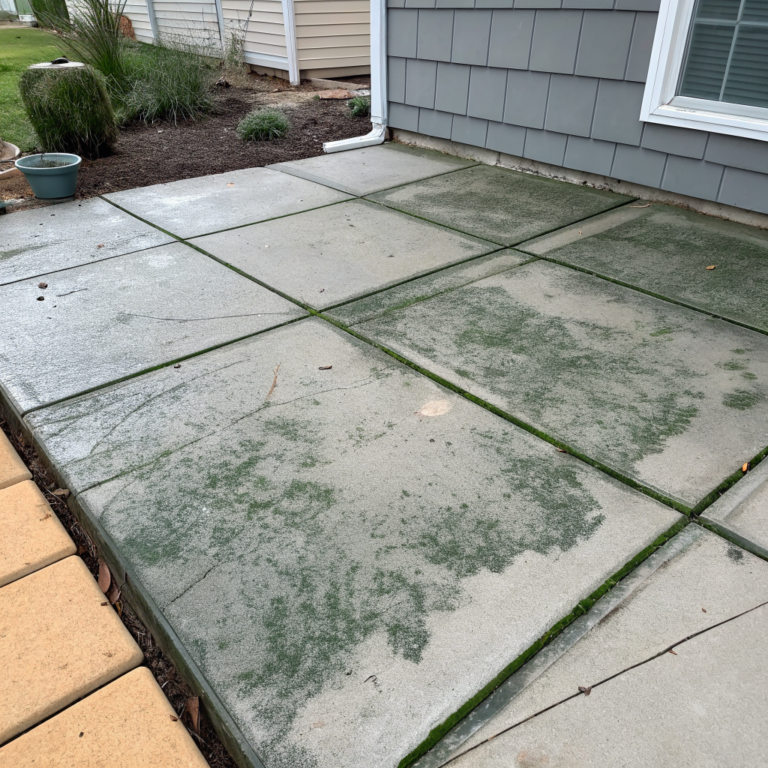
Before cleaning cement patio surfaces, clear off furniture, planters, and loose debris so you can work across the full area without interruption. Gather a stiff outdoor brush or broom, a hose with adjustable spray, and a cleaner suited to the type of dirt you’re dealing with.
For everyday grime, a mixture of dish soap and warm water often works well enough. For mildew, algae, or deeper stains, a dedicated outdoor concrete cleaner or a diluted oxygen-based cleaner can help lift buildup that soap alone won’t touch. Check any product label for concrete compatibility before applying it broadly, and always test a small, inconspicuous area first if the patio is sealed, stamped, colored, or stained — and review which surfaces avoid acidic cleaners like vinegar in Surfaces You Should Never Clean with Vinegar.
How to Clean a Cement Patio Step by Step
Cleaning a cement patio works best when you move from the least aggressive method to something stronger only if needed. Rushing straight to a pressure washer on full power is one of the most common ways people damage the surface.
- Sweep or leaf-blow the patio to remove loose dirt, leaves, and grit so they don’t scratch the surface during scrubbing.
- Wet the entire area with a hose so the cleaner spreads evenly instead of soaking into one dry patch.
- Apply your chosen cleaner according to the product label, focusing on visibly dirty or discolored sections first.
- Scrub with a stiff-bristle brush, working in sections rather than trying to cover the whole patio at once.
- Rinse thoroughly with a hose or pressure washer, working from one edge toward a drainage point so dirty water has somewhere to go.
- Let the patio air dry, then inspect for any spots that need a second pass.
If you don’t own a pressure washer or prefer not to use one, a firm brush, warm soapy water, and some extra scrubbing time can still produce solid results on most everyday grime.
Using a Pressure Washer Safely on Concrete
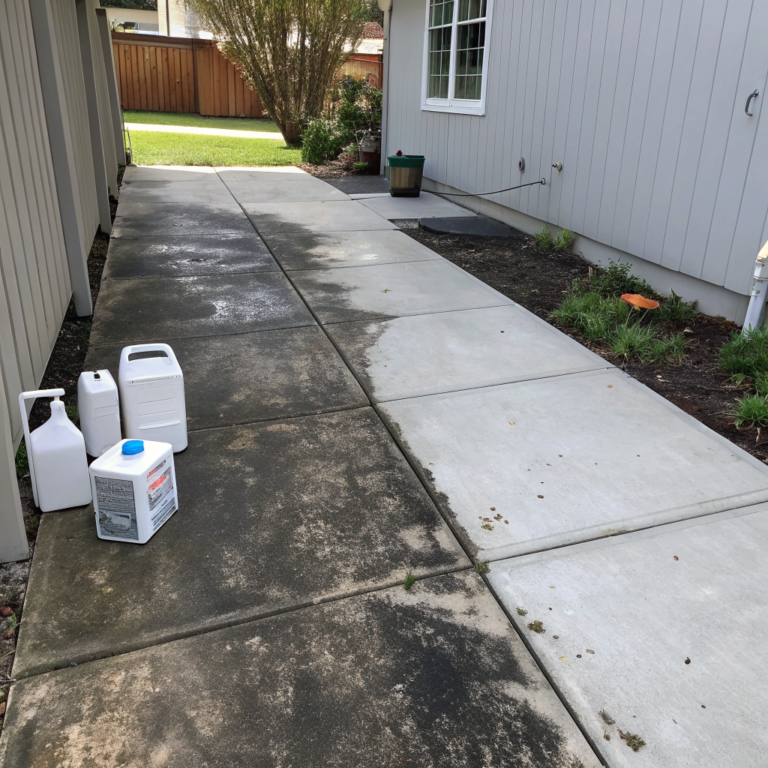
A pressure washer can speed up cleaning cement patio surfaces, but it also carries the highest risk of damage if used incorrectly. Keep the nozzle moving, use a wide fan tip rather than a narrow jet, and hold the wand at a consistent distance from the surface rather than pressing close to stubborn spots.
Sealed, stamped, or decorative concrete is more vulnerable to etching and color loss from high pressure. If your patio has any of these finishes, consider a lower pressure setting or skip the pressure washer entirely in favor of hand scrubbing. Older or already-cracked concrete can also chip or erode faster under concentrated pressure, so ease off if you notice loose material coming up along with the dirt.
TidyFormula Tip
Work in overlapping strips when pressure washing so you don’t leave faint striping or uneven clean patches across the patio.
Removing Specific Stains from a Cement Patio
Different stains on a cement patio usually call for different approaches rather than one all-purpose cleaner. Oil and grease respond better to a degreasing cleaner or absorbent powder left to draw out the stain before scrubbing, while mildew and algae respond better to a cleaner formulated for organic growth. For step-by-step guidance on heavy vehicle or kitchen oil, see our guide to removing oil stains from a concrete driveway. For persistent green growth specifically, this piece on how to remove green algae from a patio covers safe options that work on masonry surfaces.
Rust stains often need a concrete-safe rust remover rather than a general cleaner, since standard soap and scrubbing rarely lift them fully. If you’re dealing specifically with rust marks, a dedicated guide on removing rust stains from concrete covers that process in more depth. Whatever product you choose, avoid combining different cleaning chemicals in an attempt to boost results — cleaning agents that shouldn’t be mixed must not be mixed, even if each one seems mild on its own.
What to Avoid When Cleaning a Cement Patio
A few habits tend to cause more harm than the dirt itself. Avoid pressure washing at very close range, since this can etch grooves into the surface that are difficult to reverse. Avoid strong acidic cleaners on colored, stamped, or sealed concrete without checking the label first, since these finishes can discolor or wear thin.
- Skipping a spot test on sealed, stained, or decorative concrete before applying a new cleaner.
- Letting cleaner dry on the surface instead of rinsing it away, which can leave a dull or streaky residue.
- Using a wire brush on a smooth or coated surface, which can leave visible scratch marks.
- Ignoring drainage and letting dirty rinse water pool against a house foundation or garden bed.
If you’re also cleaning nearby outdoor furniture cushions as part of the same patio refresh, a separate approach applies since fabric and cushioning need gentler handling than bare concrete. See how to clean outdoor furniture cushions for that process.
Drying and Preventing Future Buildup
Let the patio dry fully before moving furniture back into place, since damp concrete can trap dirt and grip new stains more easily. A few hours of open-air drying is usually enough in most weather, though shaded or humid areas may take longer.
To slow down future buildup, sweep the patio regularly, address spills like oil or wine promptly rather than letting them set, and consider a concrete sealant if the surface currently has none, since sealed concrete generally resists staining better than bare concrete. Trimming back overhanging plants can also reduce the moisture and shade that encourage mildew and algae to return. If your patio sees winter salt, heavy road grit, or similar seasonal messes, many of the same cleanup and prevention steps appear in our how to clean a garage floor after winter guide and can be adapted for exterior slabs.
Frequently Asked Questions
How often should I clean a cement patio?
Most cement patios benefit from a thorough cleaning once or twice a year, with occasional sweeping or spot cleaning in between. Patios under trees or in humid, shaded areas may need more frequent attention because mildew and algae tend to return faster in those conditions.
Can I use bleach to clean a cement patio?
Diluted bleach can help lighten some organic staining on bare, unsealed concrete, but it isn’t suitable for every surface and should never be combined with ammonia or other cleaning chemicals. Check whether your patio is sealed or colored first, and test a small area before treating the whole surface.
What if scrubbing doesn’t remove the stain?
If scrubbing with soap and a stiff brush doesn’t lift the stain, try a cleaner formulated for that specific stain type, such as a degreaser for oil or a rust remover for rust marks. Deep or old stains sometimes require more than one treatment before they visibly fade.
Is a pressure washer necessary to clean a cement patio?
No, a pressure washer isn’t necessary for most routine cleaning, and a stiff brush with warm soapy water can handle everyday dirt and light grime effectively. A pressure washer simply speeds up the process and can help with more stubborn, widespread buildup.
Why does my patio look dirty again so soon after cleaning?
Quick regrowth of mildew or algae often points to ongoing moisture, shade, or poor drainage around the patio. Improving airflow, trimming nearby plants, and applying a sealant if the concrete is currently unsealed can help the surface stay cleaner for longer between washes.
Everything Mentioned Above
Before you leave, grab the tools you need to get the job done right the first time:
*As an Amazon Associate, TidyFormula earns from qualifying purchases.