How to Get Cat Pee Smell out of a Couch
To get cat pee smell out of a couch, blot the area promptly and use an upholstery-safe enzymatic urine cleaner according to its label. The cleaner needs to reach the same depth as the urine, but don’t soak cushions, foam, wood frames, or glued seams. Check the couch care tag before adding moisture.
Cat urine can travel through fabric and into cushion filling, especially if the spot sat unnoticed. Surface cleaning may improve the stain while leaving odor behind in the padding, so the goal is controlled treatment and thorough drying rather than heavy scrubbing.
⚡ The TidyFormula™ Quick Decision
Best approach: Blot up moisture, then apply an enzymatic pet-urine cleaner approved for your couch fabric and allow it to dry completely as directed on the label.
Use caution with: Upholstery marked S, X, or dry-clean-only, plus cushions with foam, down filling, glued layers, leather, suede, or a wood frame beneath the fabric.
Replace instead of cleaning if: The cushion remains strongly odorous after appropriate treatment and complete drying, or the filling cannot be treated and dried without damaging the couch.
What I Use For This Job
Using the right tools saves time and protects your belongings. Here are my exact recommendations:
*As an Amazon Associate, TidyFormula earns from qualifying purchases.
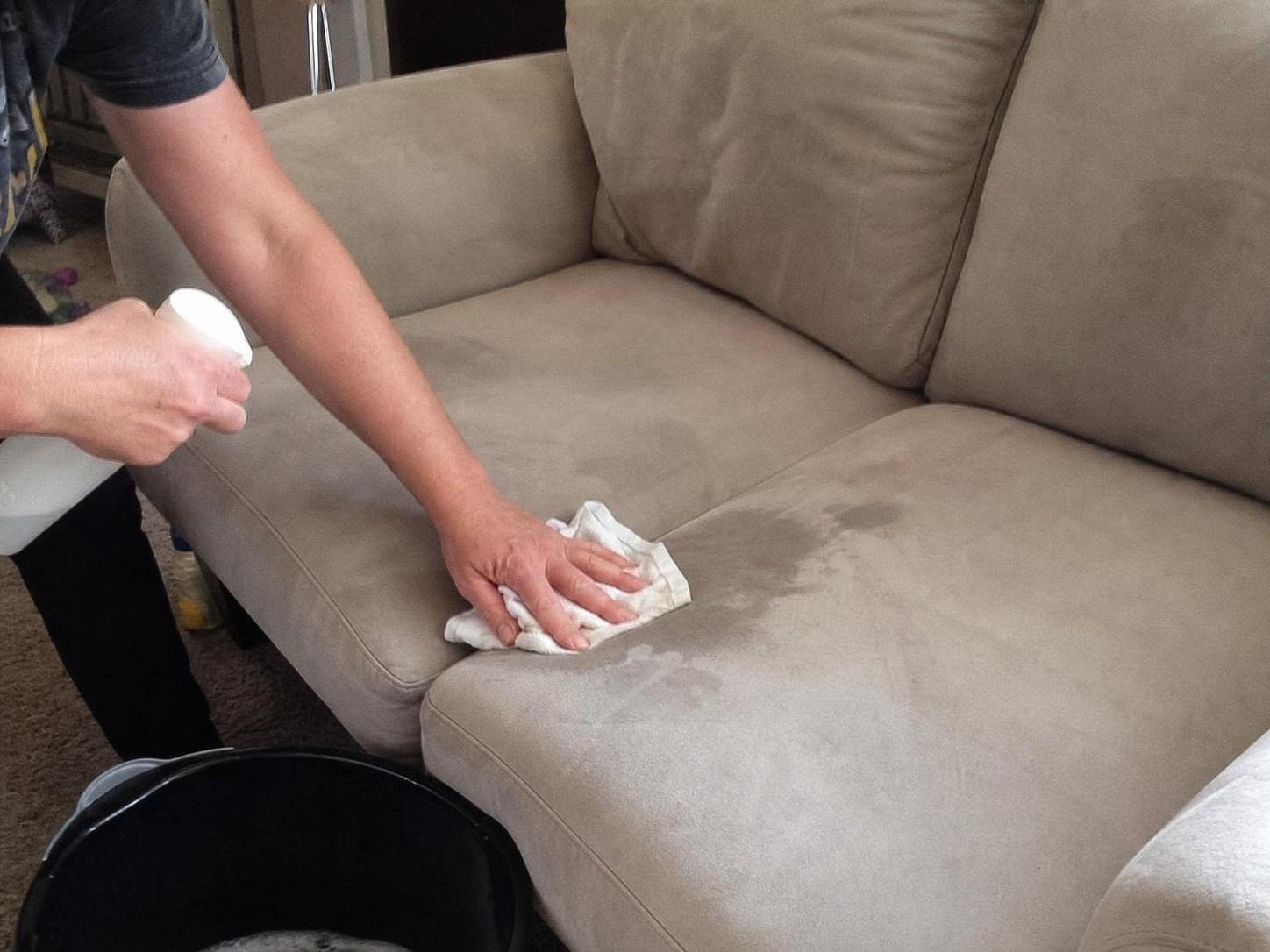
Check the couch fabric before treating the odor
The upholstery care code is your first decision point. It is often printed on a tag beneath the cushions, under the sofa, or in the manufacturer’s care information. If you cannot find it, treat the couch as water-sensitive until you can confirm the material.
| Care code or material | Safer approach |
|---|---|
| W | Water-based cleaning is generally permitted. Use an enzymatic cleaner only if its label allows use on upholstery, and avoid over-wetting the filling. |
| S | Use a solvent-based upholstery method only if the furniture manufacturer permits it. Do not assume a water-based enzyme cleaner is suitable. |
| WS or W/S | Either water-based or solvent-based cleaning may be allowed, but test the chosen product in a hidden spot first. |
| X | Do not apply liquid cleaner. Vacuuming may be the only homeowner-safe option; contact the manufacturer or an upholstery cleaner for guidance. |
| Leather, suede, velvet, silk, or vintage upholstery | Use the manufacturer’s specific care guidance. These materials can darken, stiffen, mark, or change texture with the wrong cleaner or too much moisture. |
Before treating the visible area, apply a small amount of the chosen cleaner to a hidden section, such as the back edge of a cushion. Let that test area dry fully, then check for fading, rings, stiffness, color transfer, or texture changes. Stop if you see any of these signs.
What you need
- Clean white cloths or plain white paper towels for blotting
- An enzymatic pet-urine cleaner labeled for the specific upholstery material, if permitted by the couch care instructions
- A small amount of cool water for blotting or rinsing only if the product label calls for it
- A fan or open-window airflow to help the couch dry
- Disposable gloves if you prefer a barrier while handling the soiled area
Avoid steam cleaners, hot water, heavily scented sprays, and random household mixtures. Heat and excess moisture can make the situation harder to correct, while fragrance may cover the smell temporarily without addressing urine that remains in the cushion.
Remove cat urine odor from the couch step by step
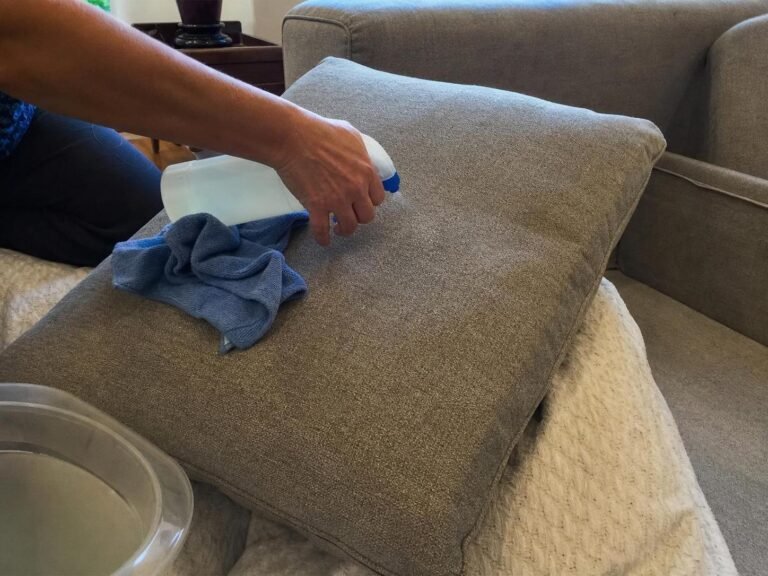
The best method is to treat the affected fabric and the underlying cushion area with an upholstery-appropriate enzymatic cleaner, using enough product to reach the urine without saturating the couch. Follow the cleaner’s current label directions if they differ from the steps below.
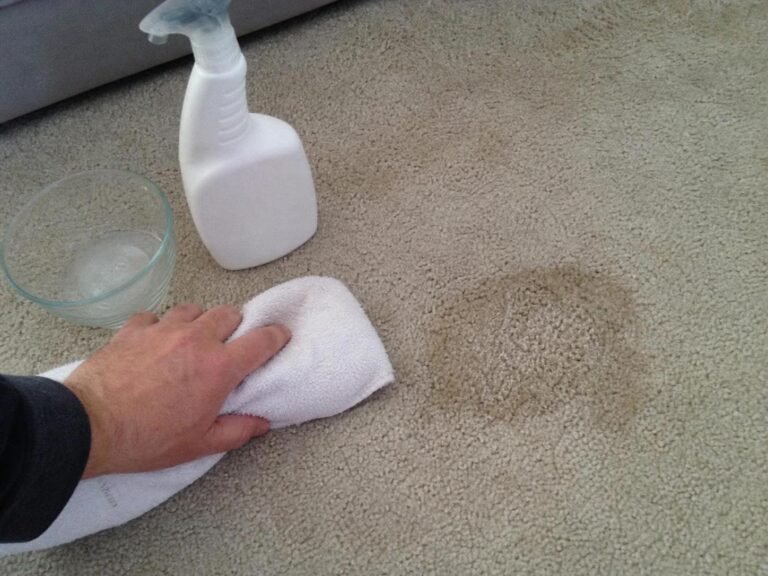
- Blot fresh urine before applying cleaner. Press white cloths or paper towels into the damp area. Use firm downward pressure, then switch to dry sections as they become wet. Do not rub, because rubbing can spread urine farther through the upholstery fibers.
- Find the full affected area. Look beyond the visible stain and check cushion seams, piping, the underside of removable cushions, and the fabric directly beneath them. Cat urine can wick outward or downward, so the odor source may be larger than the surface mark.
- Remove the cushion if possible. Place it on a clean, dry towel or waterproof surface while you work. If urine reached the couch deck or frame fabric, treat that area separately rather than assuming the cushion is the only source.
- Apply the enzymatic cleaner carefully. Use it according to the product label, concentrating on the affected zone. For a urine spot that reached the cushion filling, surface misting is often not enough; the treatment needs to contact the same depth as the urine. Apply slowly and stop before liquid begins pooling, dripping through the cushion, or reaching a wood frame.
- Allow the cleaner to remain as directed on its label. Keep children and pets away from the damp couch while it is being treated. Do not add vinegar, baking soda, dish soap, peroxide, bleach, or another cleaner to the same area.
- Blot excess moisture if the label permits. Press with a clean dry cloth rather than scrubbing. The fabric should be damp from treatment, not wet enough that the cushion feels waterlogged or liquid seeps from seams.
- Dry the couch completely before judging the result. Stand removable cushions on an edge where air can reach both sides. Run a fan nearby and leave space between cushions and the couch frame. Do not use high heat from a hair dryer, heater, or steam tool.
- Check for remaining odor only after the area is dry. If the smell returns as the cushion dries, urine may have reached deeper filling, the cushion cover, the couch deck, or the frame. Repeat treatment only if the fabric and cleaner labels allow it and the cushion can dry thoroughly between applications.
🧪 Why This Works
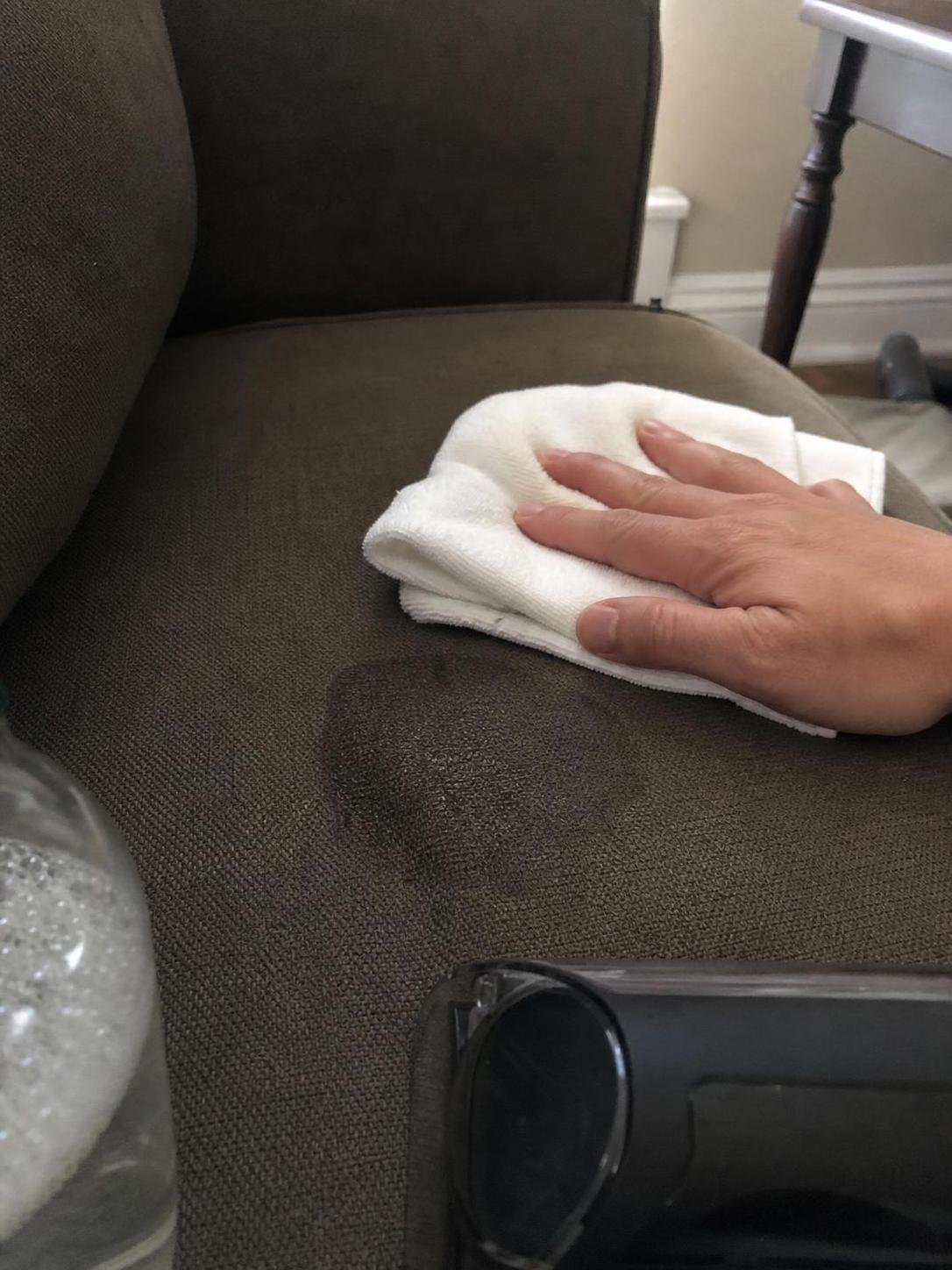
Blotting removes loose moisture before it can spread farther through the cushion. An enzymatic urine cleaner is designed for pet-urine residue, while complete airflow drying helps prevent dampness from remaining trapped in thick upholstery and cushion filling.
Do not make these couch-cleaning mistakes
Most failed odor treatments come from treating only the top fabric, using too much liquid, or judging the result before the couch is dry.
Using too little cleaner on a deep urine spot
If the smell seems stronger near cushion seams, on the underside of a cushion, or when you press into the filling, the urine likely traveled below the surface. Treating only the top fabric may leave odor in the foam or batting. Apply the product carefully enough to reach the affected depth, but do not saturate the entire cushion.
Soaking the cushion to “flush it out”
A saturated cushion can take a long time to dry internally. This may leave the filling misshapen, cause water marks, loosen glued layers, or trap moisture where you cannot blot it. If the cushion feels heavy, squishy, or wet at the seams, stop adding liquid and focus on blotting and airflow.
Scrubbing the stain aggressively
Hard scrubbing can roughen upholstery fibers, spread the stain, and create a lighter or darker patch once the fabric dries. Blot with controlled pressure instead. If a stain remains after odor treatment, address it only with a fabric-safe upholstery cleaner that matches the couch care code.
Covering the smell with fragrance
Deodorizers, perfume sprays, and heavily scented fabric products may make the couch smell different without resolving urine in the filling. If odor returns after the fragrance fades, go back to the affected cushion, underside, deck fabric, and nearby seams rather than adding more fragrance.
If the first cleaning did not solve the problem
A remaining cat pee smell usually means the source was missed, the cleaner did not reach deep enough, or the cushion is still damp. Let the couch dry fully before deciding which issue applies.
- The smell returns after drying: Inspect the underside of the cushion, cushion cover, couch deck, and adjacent seams. Treat the confirmed source with the same fabric-safe method.
- The cushion still feels damp inside: Separate removable cushions, stand them on edge, and increase airflow. Do not put the couch back into regular use until the filling feels dry throughout.
- A water ring appears: Blot the outer edge of the ring with a barely damp white cloth only if the care label permits water-based cleaning, then blot dry. If the fabric is S or X coded, stop and use manufacturer-approved care guidance.
- The fabric feels stiff after drying: There may be cleaner residue. Check the product label for any required blotting or rinsing step. Do not add a second product to counteract the residue.
- The odor seems to come from the couch base: Remove cushions and inspect the fabric platform beneath them. If urine reached exposed wood, a hidden interior layer, or dense padding that cannot be safely treated, professional upholstery help or replacement may be more practical.
If you need to freshen the rest of the upholstery while working around the treated spot, use a low-moisture approach suited to the care code. This method for cleaning a couch without a machine can help with general surface soil, but it is not a substitute for treating urine that has soaked into a cushion.
Dry the couch fully before putting it back together
Drying is part of the cleanup, especially with thick seat cushions. Keep removable cushions separated from the frame until the cover, seams, and filling feel dry. Airflow matters more than heat: a fan, open interior doors, and space around the cushions can help moisture leave gradually.
Drying time varies with cushion thickness, foam density, fabric type, indoor humidity, airflow, and how deeply the urine and cleaner reached. Avoid sitting on a damp cushion or replacing covers before the filling is dry, since pressure can move remaining moisture deeper into the cushion.
For urine problems on other padded household items, the same careful approach applies: treat the affected depth without soaking the filling. The guidance for cleaning cat urine from a mattress with an enzyme method may be useful if the same issue occurs on a bed.
When replacement or professional help makes more sense
Consider replacement or professional upholstery care when urine has repeatedly soaked the same cushion, reached a wood frame or inaccessible padding, or remains strongly odorous after suitable treatment and complete drying. This is especially true for non-removable cushions, delicate upholstery, S- or X-coded fabric, and couch construction with glued foam layers that should not be wet.
A removable cushion insert may be easier to replace than an entire couch. Check whether the manufacturer offers replacement inserts or covers before deciding. If you hire an upholstery cleaner, tell them the couch care code, the urine location, the products already used, and whether the cushion has been heavily wetted.
Frequently Asked Questions
Can you use vinegar and baking soda on cat urine in a couch?
It is better to avoid using them as a substitute for an upholstery-safe enzymatic urine cleaner. They can leave residue, add moisture, and may not be suitable for your fabric. Do not combine them with another cleaning product.
Can you use a carpet cleaner or upholstery machine on a cat urine couch cushion?
Use a machine only if the couch manufacturer permits it and the cushion can be dried thoroughly. Extraction tools can add substantial moisture to foam and batting, so they are not a good choice for water-sensitive fabric, non-removable cushions, or couches with glued construction.
Why does the couch smell worse after it gets damp?
Moisture can make lingering urine odor more noticeable. Allow the cushion to dry completely, then inspect the cushion underside, seams, and couch base for an untreated source.
How can you prevent repeat accidents on the same couch?
Once the couch is dry, use a washable throw or removable protective cover on the affected seating area. Addressing the reason for repeat accidents may also require guidance from an appropriate pet-care professional, especially if the behavior is new or persistent.
For the best chance of removing cat pee smell without damage, use an enzymatic cleaner that suits your upholstery, treat the full affected depth without soaking the cushion, and allow complete airflow drying before reassessing the odor. If the filling or couch base cannot be reached and dried safely, replacement or professional upholstery care is the more realistic option.
Everything Mentioned Above
Before you leave, grab the tools you need to get the job done right the first time:
*As an Amazon Associate, TidyFormula earns from qualifying purchases.