
How to Clean an Upholstered Headboard
To clean an upholstered headboard without damage, start with dry vacuuming, then spot-clean with the mildest method allowed by its care label. Use very little moisture, blot instead of scrubbing, and test any cleaner on a hidden area first. Saturating padding, seams, or glued panels is the main risk.
Headboards collect dust, hair products, skin oils, and occasional stains because they sit close to pillows and bedding. A light maintenance clean usually works well; deep cleaning is best reserved for visible soil, odors, or a specific spill.
⚡ The TidyFormula™ Quick Decision
Best approach: Vacuum the fabric first, then use a barely damp cloth and a fabric-safe cleaner only where needed.
Use caution with: Thick padding, velvet, linen, silk-like fabrics, unfinished wood trim, and headboards with glued seams or decorative buttons.
Replace instead of cleaning if: The stuffing remains wet, smells musty after thorough drying, separates from the frame, or the fabric has extensive permanent discoloration or deterioration.
What I Use For This Job
Using the right tools saves time and protects your belongings. Here are my exact recommendations:
*As an Amazon Associate, TidyFormula earns from qualifying purchases.
Check the fabric care information before using moisture
The safest cleaner for an upholstered headboard depends on the upholstery fabric and its care instructions. Check the tag on the headboard, the frame, or the original manufacturer information before applying water or a cleaning product.
- W: Water-based upholstery cleaners may be suitable if the label permits them.
- S: Use only a solvent-based upholstery cleaner approved for that fabric. Avoid water-based methods.
- WS or W/S: Water-based or solvent-based upholstery cleaning may be allowed, but a hidden-area test still matters.
- X: Vacuum or brush only unless the manufacturer gives another specific instruction.
- No tag or unknown fabric: Treat the fabric as delicate. Vacuum first, use minimal moisture only after a hidden-area test, or contact the manufacturer or an upholstery cleaner for guidance.
Look closely at the construction, too. Tufted buttons, nailhead trim, piping, glued panels, and heavily padded sections can hold moisture where you cannot easily reach it. If the headboard is attached to a wall or bed frame, protect nearby wood, painted walls, and bedding before you begin.
What you need for a routine cleaning
A routine clean should remove loose debris and surface soil without soaking the upholstery. Keep the supply list simple so you do not leave cleaner residue behind.
- A vacuum with an upholstery brush or soft brush attachment
- A soft, clean microfiber cloth or white lint-free cloth
- A soft upholstery brush, optional for textured weaves
- A small bowl of clean water if the care label allows water-based cleaning
- A mild fabric-safe upholstery cleaner that matches the care label, if needed
- Dry towels for blotting moisture
Avoid harsh all-purpose sprays, bleach, abrasive powders, and heavily scented products unless the headboard manufacturer specifically allows them. Do not mix cleaning products. Strong cleaners can fade dye, stiffen fibers, leave a visible ring, or affect adhesive beneath the fabric.
Use a low-moisture method for the whole headboard
Dry removal first, then targeted blotting is the best way to clean most upholstered headboards. It removes surface debris before moisture turns dust or hair product residue into a larger mark.
- Remove bedding and pull the bed slightly forward if possible. This gives you room to reach the lower edge, side seams, and space behind the headboard. Cover the mattress with a clean sheet or towel if you are spot-cleaning above it.
- Vacuum the upholstery slowly. Use the upholstery attachment on the lowest practical suction setting. Work from the top down, following the direction of the fabric pile or weave. Use a soft brush for seams, tufting, buttons, and crevices rather than pressing the vacuum nozzle into the fabric.
- Test your chosen cleaner in a hidden spot. Try the lower back edge or an area hidden by the mattress. Let the test patch dry fully before continuing. Stop if the color transfers to the cloth, the fabric darkens unevenly, the pile changes texture, or a water ring appears.
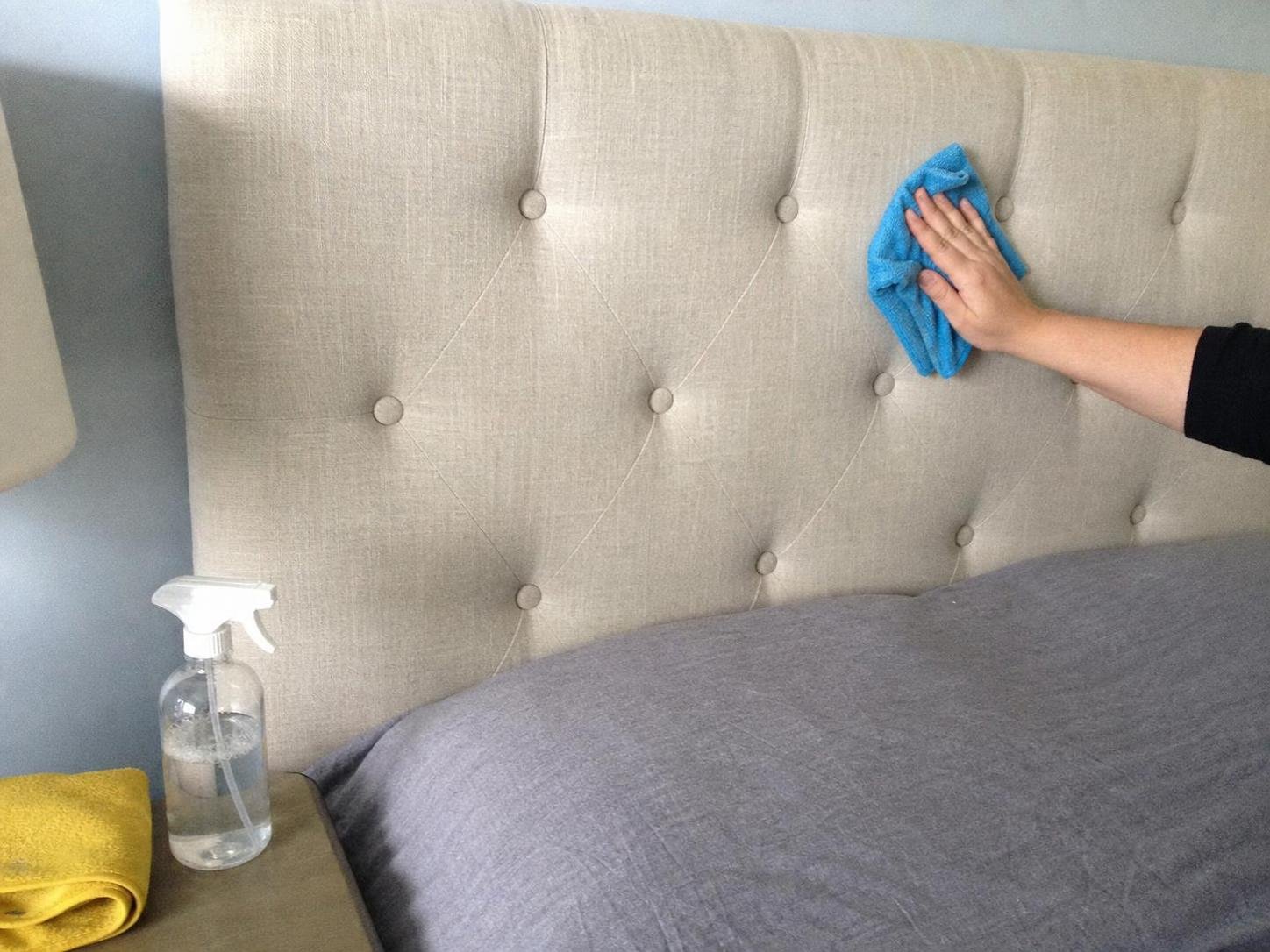
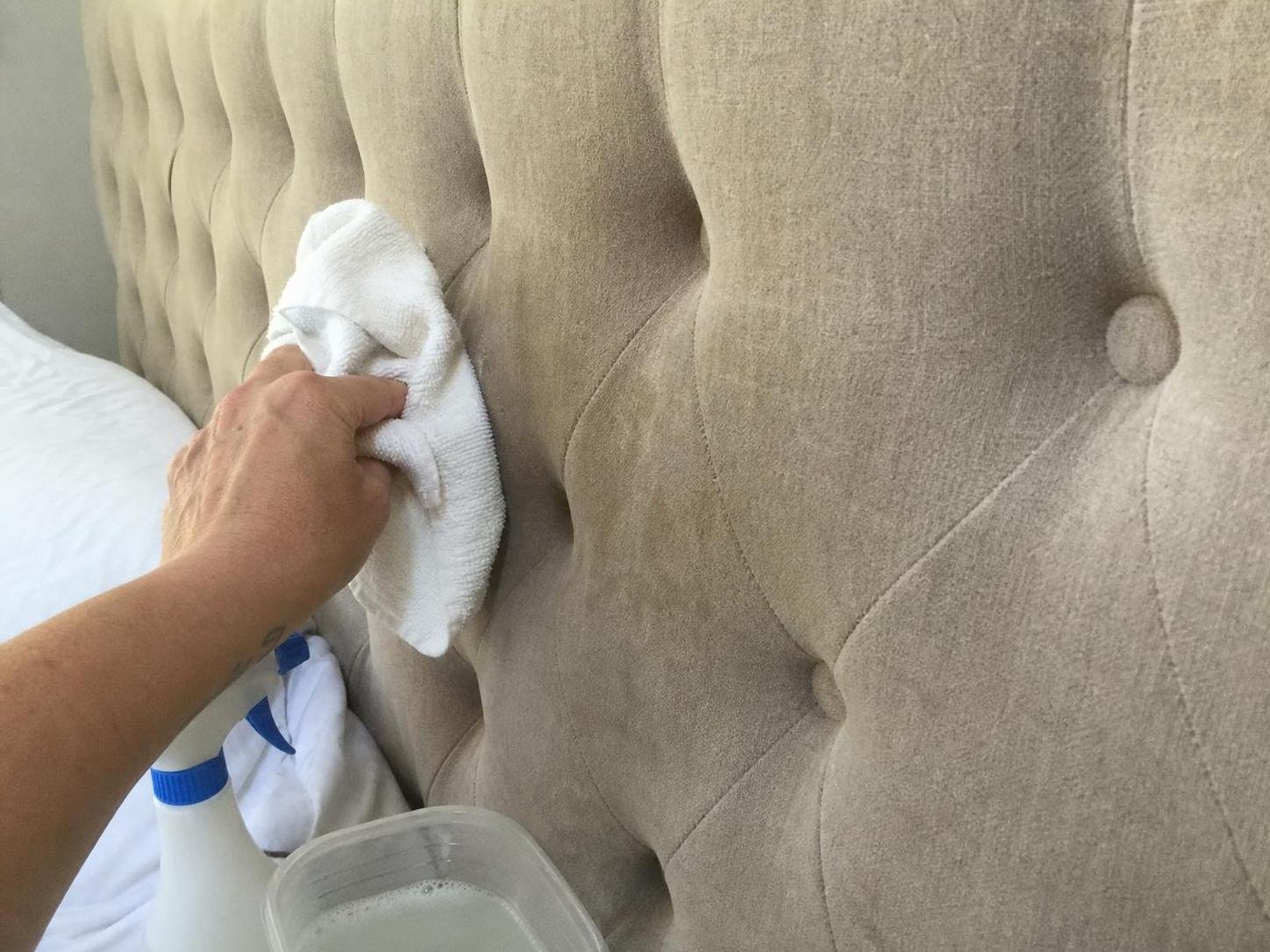
- Clean only the soiled areas with minimal moisture. Apply the cleaner to your cloth rather than directly onto the headboard, unless the product label specifically says otherwise. Blot or lightly wipe the affected area using small movements. Do not scrub back and forth, especially on velvet, chenille, linen, or loosely woven upholstery.
- Remove cleaner residue if the product directions call for it. For water-safe fabric, use a second cloth that is only lightly dampened with clean water to blot away residue. For solvent-clean-only fabrics, follow the product label instead of adding water.
- Blot dry immediately. Press a dry towel against the cleaned area to pull out surface moisture. Do not press hard enough to flatten padding or force moisture deeper into the headboard.
🧪 Why This Works
Vacuuming removes dry particles before they are worked into damp fabric. Applying cleaner to a cloth keeps the amount of liquid under control, which is especially important because upholstered headboards often have foam, batting, wood, and adhesive beneath the visible fabric.
Adjust the method for stains, oils, and textured fabrics
One cleaning approach does not fit every headboard. Choose the least aggressive option that matches the fabric label and the type of soil you are dealing with.
| Problem or material | Best first response | What to avoid |
|---|---|---|
| Dust, hair, or lint | Vacuum with a soft upholstery attachment and brush seams gently. | Wet wiping before vacuuming. |
| Fresh spill on water-safe fabric | Blot immediately with a dry white cloth, then use a fabric-safe cleaner if needed. | Rubbing, soaking, or pouring cleaner directly onto the fabric. |
| Skin oil or hair product buildup | Use a label-compatible upholstery cleaner sparingly after vacuuming. | Heavy soap application, which can leave a sticky residue. |
| Velvet, chenille, or brushed fabric | Use a very soft brush and minimal moisture; follow the pile direction. | Scrubbing, stiff brushes, or pressing hard enough to crush the pile. |
| Unknown, antique, silk-like, or delicate upholstery | Vacuum only or seek manufacturer or professional upholstery guidance. | DIY stain removers, steam, and water-based cleaning without confirmation. |
How to deal with a specific stain
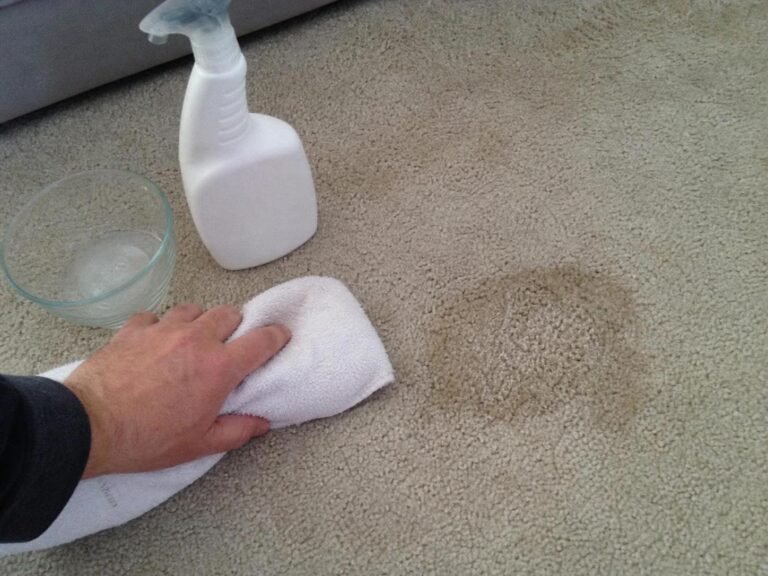
For a fresh stain, act quickly but do not rush into aggressive cleaning. Blotting removes more of a fresh spill than rubbing, which can spread the stain and push it into the padding.
Food, makeup, or body-oil marks
Blot away loose material with a dry white cloth. Then use the mildest cleaner allowed by the care label, working from the outer edge toward the center. Use small amounts and switch to a clean section of cloth as soil transfers. If a greasy mark remains after the fabric dries, repeat a light spot treatment rather than applying a larger amount of cleaner.
Water marks or cleaning rings
A ring usually means the cleaned area dried differently from the surrounding fabric or cleaner residue remained behind. If the care label allows water-based cleaning, lightly dampen a clean cloth and blend the edge of the mark outward without saturating the fabric. Blot dry and allow the entire area to dry evenly with good airflow. Stop if the fabric develops more uneven color.
Blood or bodily-fluid stains
Blot the stain rather than scrubbing it into the fabric, and check the upholstery care label before treating it. If the same incident affected the mattress, use the appropriate mattress-specific guidance for cleaning period blood stains from a mattress rather than applying a mattress method directly to the upholstered headboard.
Pet or urine-related odor
Do not saturate the headboard in an effort to chase an odor. Moisture can reach the padding or wood backing and make drying difficult. If urine reached the mattress as well, follow the separate guidance for cleaning dog urine from a mattress. For a headboard with odor deep in its padding, professional upholstery assessment or replacement may be more practical than repeated wet treatments.
Common upholstered headboard cleaning mistakes
Most damage comes from too much liquid, too much friction, or using a product that does not match the upholstery code. A careful first attempt is easier to correct than an over-wet headboard.
- Spraying cleaner directly onto the fabric: This can create dark patches and send liquid into the foam or backing. Apply the cleaner to a cloth unless its label specifically directs otherwise.
- Using too much water: A headboard may feel dry on the surface while padding remains damp underneath. If the fabric feels cool, heavy, or noticeably darker after blotting, increase airflow and do not use the bed against that area until it dries fully.
- Scrubbing a stain: Scrubbing can roughen fibers, spread color, and flatten velvet or chenille. Use a blotting motion and repeat gently if needed.
- Using colored towels: Dye from a towel can transfer when fabric is damp. Use white or colorfast cloths for spot cleaning.
- Using steam without confirmation: Steam can add significant moisture and heat, which may affect fabric backing, padding, wood, or glued construction. Avoid it unless the manufacturer specifically permits it.
- Ignoring residue: Soap or cleaner left in the fabric can make the area feel stiff or attract more soil. Remove residue as directed on the cleaner label, using as little moisture as possible.
Dry the headboard completely before putting the bed back
Good drying is part of cleaning an upholstered headboard. Leave the bed pulled forward enough to allow air to circulate around the cleaned area, and keep pillows, blankets, and the mattress from pressing against damp upholstery.
Use normal room ventilation and a fan aimed nearby rather than concentrated heat. Avoid hair dryers, space heaters, or direct high heat, which can affect fabric, backing, adhesive, or the shape of padding. Drying time varies with the fabric, padding thickness, humidity, airflow, and how much moisture reached the seams.
Before returning bedding to its usual position, check that the upholstery feels dry rather than cool or damp. Lightly brush velvet, chenille, or other nap fabrics in the proper direction once dry to restore a more even appearance. If a cleaned spot still smells of cleaner, feels stiff, or looks darker after drying, use less product on the next attempt and focus on residue removal rather than adding more cleaner.
How often should you clean an upholstered headboard?
Vacuuming every few weeks or whenever you change bedding helps control dust, lint, and hair along the top edge and tufted areas. Spot-clean spills as soon as practical. A fuller low-moisture clean is usually only needed when you see buildup, notice transfer from hair products, or find a specific stain.
For everyday prevention, keep clean pillows between your hair and the upholstery, avoid leaning wet hair against the headboard, and address product residue before it becomes embedded. The safest routine is simple: vacuum regularly, spot-clean gently, and keep moisture out of the padding.
Everything Mentioned Above
Before you leave, grab the tools you need to get the job done right the first time:
*As an Amazon Associate, TidyFormula earns from qualifying purchases.
One Comment