How to Clean Painted Walls without Removing Paint
The safest way to clean painted walls without removing paint is to start with the gentlest method that works: a dry microfiber cloth or duster for light dust, followed by a barely damp cloth with a few drops of mild dish soap in warm water for actual grime. Skip abrasive scrubbing, strong degreasers, and anything you haven’t tested on a hidden spot first, since paint sheen and age both affect how much cleaning a wall can handle.
Flat paint in a hallway that gets bumped by backpacks and shoes behaves very differently than the semi-gloss trim in a kids’ bathroom, and using the same approach on both is one of the fastest ways to end up with dull patches or streaks you didn’t have before.
⚡ The TidyFormula™ Quick Decision
Best approach: Dust first, then wipe with a soft cloth dampened in mild dish soap and warm water, working in small sections and rinsing with a second clean, barely damp cloth.
Use caution with: Flat and matte finishes, older paint jobs, unprimed patch repairs, and any wall you haven’t spot-tested in a low-visibility area first.
Stop and reassess if: The cloth picks up color, the wall feels tacky or starts to soften, or a cleaned spot looks shinier or duller than the surrounding paint once dry.
What I Use For This Job
Using the right tools saves time and protects your belongings. Here are my exact recommendations:
*As an Amazon Associate, TidyFormula earns from qualifying purchases.
Check the Paint Finish Before You Start
How much cleaning a wall can take depends heavily on its sheen. Flat and matte finishes have more texture and less binder at the surface, so they scratch, burnish, and absorb moisture more easily. Satin, eggshell, semi-gloss, and gloss finishes are more tightly sealed and generally tolerate wiping and light scrubbing better.
If you don’t know the finish, look at the wall in raised light. Flat paint looks uniformly matte with no shine at any angle. Satin and semi-gloss show a soft to noticeable sheen. When in doubt, treat the wall as flat paint and use the gentlest method available.
Always Test in a Hidden Spot First
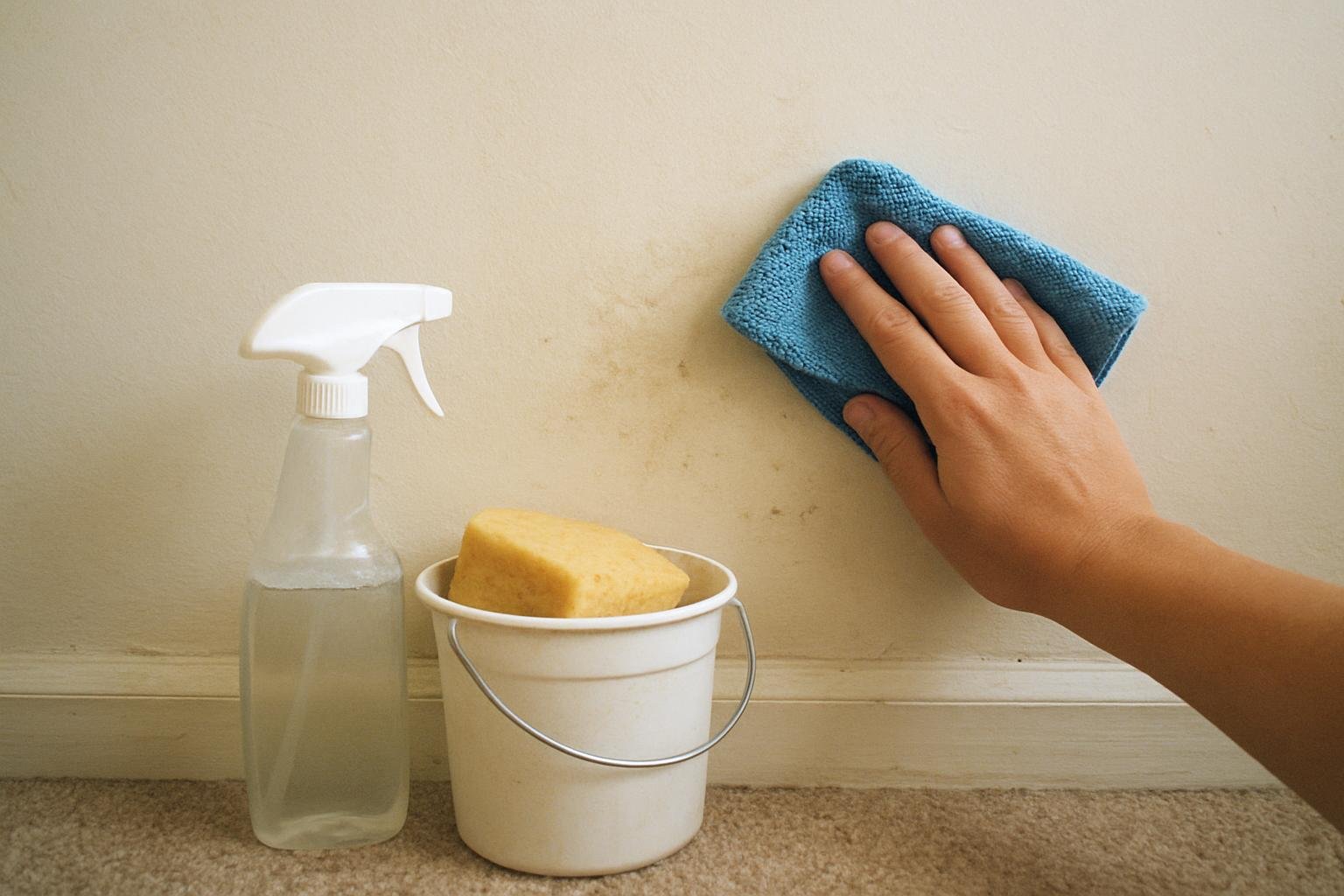
Before cleaning a visible section, test your cleaner on a small, inconspicuous area, such as behind a door or inside a closet. Dampen a white cloth, wipe a small patch, and let it dry completely. Check for color transfer on the cloth, a change in sheen, or any softening of the paint. If everything looks the same after drying, you can move on to the rest of the wall with more confidence.
Skipping this step is one of the most common painted walls without removing paint cleaning mistakes, especially with older paint, custom-tinted colors, or walls that may have been touched up with a slightly different paint batch.
Step-by-Step: The Safest Way to Clean Painted Walls
- Dust the wall first. Use a dry microfiber cloth, a soft duster, or a vacuum with a brush attachment to remove loose dust and cobwebs. Cleaning over dust first can grind grit into the paint and cause fine scratches.
- Mix a mild cleaning solution. Combine a few drops of gentle dish soap with warm water in a bucket. You want the water to feel slightly soapy, not sudsy. Avoid adding vinegar, ammonia, or any other cleaning product to this mixture.
- Wring the cloth almost dry. Dip a soft microfiber cloth or sponge into the solution, then wring it out until it’s just damp. Excess water is the main reason walls end up with drip marks, softened paint, or water stains on drywall seams.
- Wipe in small sections using light pressure. Work top to bottom in overlapping strokes rather than pressing hard in one spot. If a mark doesn’t come up with light pressure, stop and reassess rather than scrubbing harder.
- Rinse with a second clean, damp cloth. Wipe the same section again with a cloth dampened in plain water to remove any soap residue, which can otherwise leave dull streaks once dry.
- Dry the area with a soft towel. Pat the wall dry instead of letting it air-dry with visible moisture sitting on the surface, especially on flat finishes.
Best Way to Handle Specific Marks
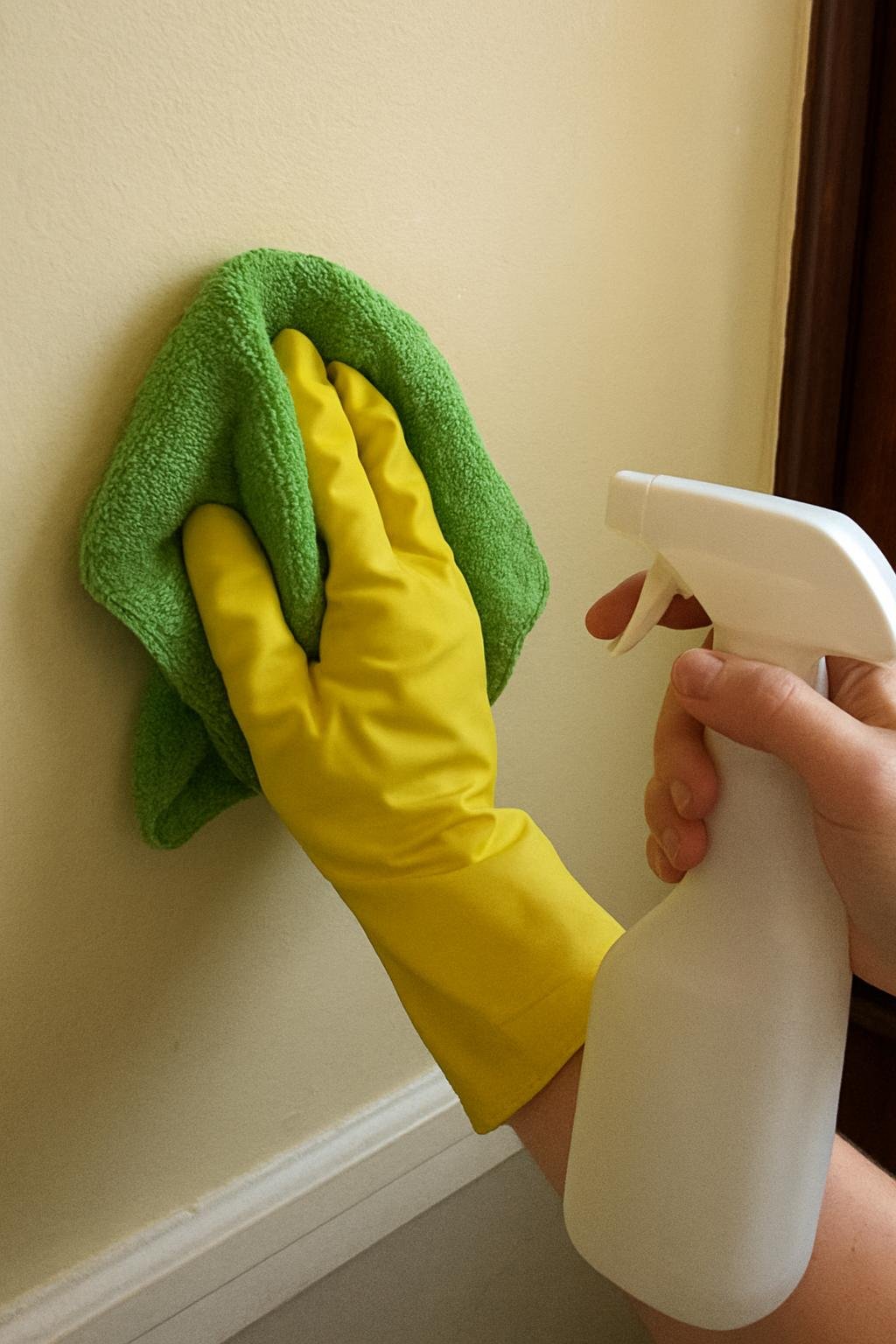
General grime responds well to the soap-and-water method above, but a few common wall problems need slightly different handling.
- Scuff marks from shoes or furniture often lift with a dry microfiber cloth alone, using small circular motions before you introduce any moisture.
- Greasy fingerprints near light switches or doorframes may need a slightly stronger dish soap solution, but keep testing pressure gentle and rinse promptly.
- Crayon or marker on flat paint is genuinely difficult to remove without affecting the finish underneath, and aggressive scrubbing often leaves a shiny patch even when the mark comes off. Consider whether a small touch-up with matching paint is more realistic than continued scrubbing.
For any mark, work from the outside edge inward so you’re not spreading residue across a wider area of wall.
Cleaning Mistakes That Damage Painted Walls
Most paint damage from cleaning comes from a small number of repeatable mistakes:
- Using too much water. Soaked cloths can push moisture into seams, texture, and drywall paper, leading to swelling or staining that shows up after the wall dries.
- Scrubbing instead of wiping. Firm, repeated scrubbing in one spot is far more likely to burnish flat paint than a light wipe repeated a few times.
- Using melamine foam sponges on flat paint. These mildly abrasive sponges can remove a thin layer of paint along with the stain, which is especially noticeable on flat and matte finishes.
- Skipping the rinse step. Leftover soap residue can attract dust faster once dry, making the wall look dirty again sooner.
- Cleaning the same spot repeatedly over time. Even gentle methods can gradually thin paint if one area, like a light switch or doorframe, gets cleaned far more often than the surrounding wall.
How Often to Clean Painted Walls Without Removing Paint
Most painted walls in living spaces only need full wiping once every few months, with spot-cleaning as marks appear in between. High-traffic areas such as hallways, stairwells, and kitchens near cooking surfaces may need spot attention more often, while bedrooms and low-traffic rooms often go longer between cleanings. Cleaning more often than necessary increases the chance of gradual sheen changes, so treat routine dusting as your main maintenance and save wet cleaning for actual marks and buildup.
When a Wall Needs More Than Cleaning
If a stain doesn’t lift after one or two gentle attempts, if the paint has already started peeling or bubbling before you even begin, or if you notice soft, damp, or discolored drywall underneath, stop cleaning and treat it as a repair or repaint situation rather than a cleaning problem. Continued scrubbing on compromised paint or drywall usually makes the damage more visible, not less.
If you’re working through other parts of the home at the same time, you may also find it useful to see how to clean a window AC unit without removing it or how to clean an oven without chemicals for other no-removal cleaning approaches that follow the same gentle-first principle.
Everything Mentioned Above
Before you leave, grab the tools you need to get the job done right the first time:
*As an Amazon Associate, TidyFormula earns from qualifying purchases.