
How to Clean Up Sick From Carpet Safely
To clean up sick from carpet, start by removing solid material with a scraping tool and paper towels, working from the outside edge inward to avoid spreading it. For pet-related incidents, see our guide to cleaning pet vomit from carpet. Blot up excess liquid, apply a carpet-safe cleaner appropriate for the fiber type, rinse with cool water, and blot dry. Always check your carpet’s care label before using any cleaning product.
⚡ The TidyFormula™ Quick Decision
Best approach: Remove solids first, blot (don’t scrub) liquid, then treat the area with a carpet-appropriate cleaner following the product label, rinsing and drying thoroughly afterward.
Use caution with: Wool, silk, or other delicate natural-fiber carpets and rugs, which may require gentler cleaners or professional attention; always check the manufacturer’s care instructions first.
Stop and reassess if: The stain or odor persists after cleaning, the carpet backing seems affected, or you’re unsure whether a product is safe for your specific carpet material—consider contacting a professional carpet cleaner in these cases.
Why Quick, Careful Action Matters
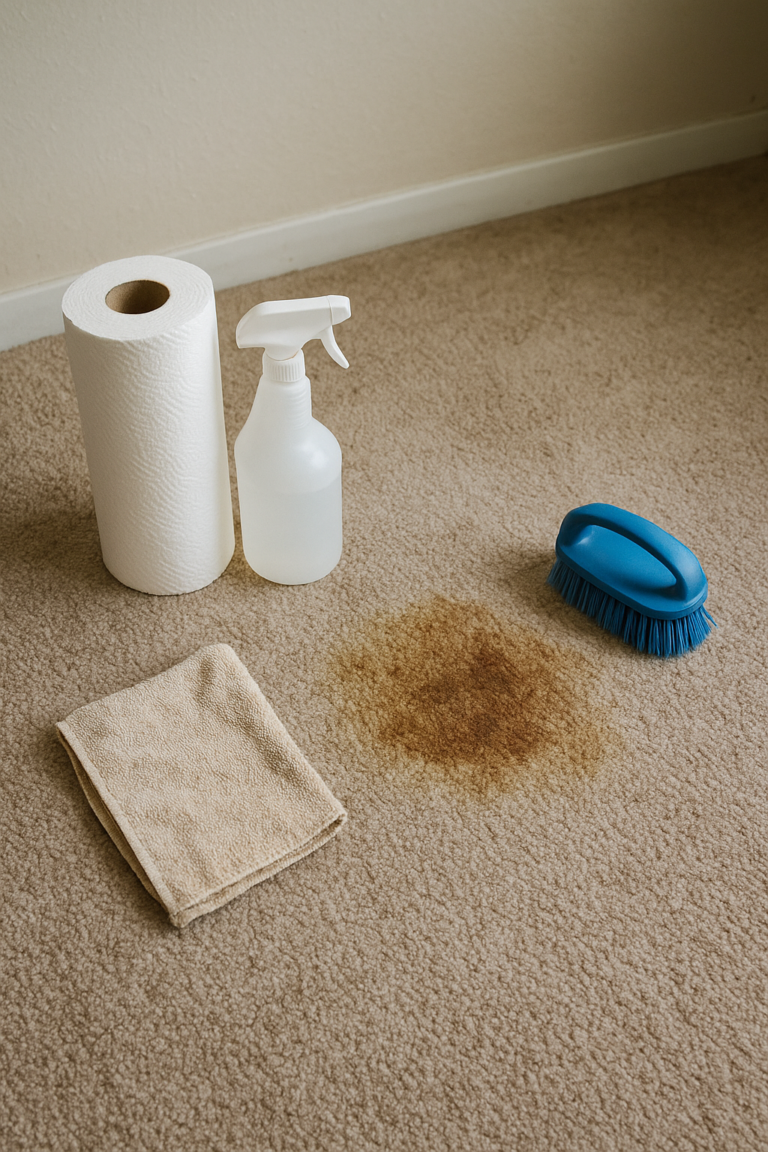
Acting promptly helps prevent the stain from setting into carpet fibers and reduces the chance it soaks deeper into the padding underneath. However, speed shouldn’t come at the cost of technique—scrubbing too aggressively can push material further into the carpet and damage fibers, so a methodical approach usually works better than rushing.
What I Use For This Job
Using the right tools saves time and protects your belongings. Here are my exact recommendations:
*As an Amazon Associate, TidyFormula earns from qualifying purchases.
What You’ll Need
- Disposable gloves
- Paper towels or disposable cloths
- A dull scraping tool (an old spoon or plastic scraper works well)
- A plastic bag for solid waste disposal
- Cool water
- A carpet-safe cleaning product suited to your carpet’s fiber type
- A clean, dry towel for blotting
- Optional: a wet/dry vacuum for extracting moisture
Step-by-Step Cleanup Process
1. Prepare and Protect
Put on disposable gloves before you begin. If there’s a strong odor or you’re sensitive to airborne particles, opening a window or running a fan can help with ventilation.
2. Remove Solid Material
Using a dull scraper or the edge of a paper towel, gently lift solid material starting from the outer edges and working toward the center. This inward technique helps contain the mess rather than spreading it across more carpet. Place solids directly into a plastic bag for disposal. If the residue has already dried and become gummy, techniques for getting dried slime out of carpet may help loosen it before blotting.
3. Blot Excess Liquid
Press clean paper towels or cloths firmly onto the affected area to absorb as much liquid as possible. Blot rather than rub—rubbing can drive liquid deeper into carpet fibers and the padding below. Replace towels as they become saturated.
4. Choose an Appropriate Cleaner
Carpet fiber type matters here. Synthetic carpets like nylon or polyester generally tolerate a wider range of carpet-cleaning products, while natural fibers such as wool or sisal may need gentler, fiber-specific formulas. Check your carpet’s care label or any documentation from the manufacturer or installer for guidance on approved cleaning products. When in doubt, test any cleaner on a small, hidden area of carpet first and wait to see how the fiber and color respond before treating the visible stain. For tips on spot-treating common spills and stains, see our guide to removing coffee stains from carpet.
5. Apply and Work the Cleaner
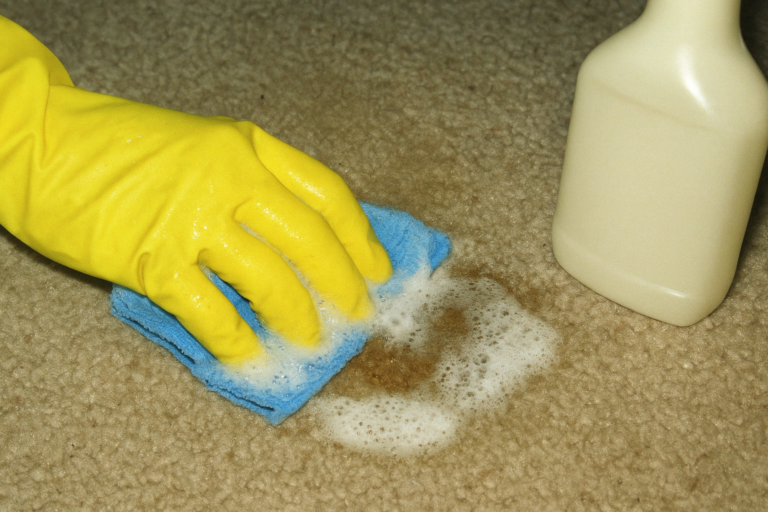
Follow the product label’s instructions for application. Typically, this means applying the cleaner to the stained area and allowing it to sit briefly before gently working it into the fibers with a soft brush or cloth. Avoid oversaturating the carpet, as excess moisture can seep into the padding and subfloor, potentially leading to longer drying times or lingering odor.
6. Rinse the Area
After treating with cleaner, rinse the spot with a small amount of cool water on a clean cloth to help remove cleaning product residue. Leftover residue can attract dirt over time, so a light rinse is worth the extra step. If you don’t have a machine for deeper extraction, there are manual extraction techniques described in our guide to cleaning carpet without a carpet cleaner.
7. Blot Dry
Press dry towels into the area to absorb as much moisture as possible. If you have access to a wet/dry vacuum, using it to extract remaining moisture can speed up drying and help prevent dampness from settling into the padding.
Drying and Aftercare
Allow the area to air dry completely, which may take several hours depending on carpet thickness, padding, and room ventilation. Placing a fan nearby or opening a window can help speed this along. Avoid walking on the damp area or placing furniture back on it until it’s fully dry, since trapped moisture can affect both the carpet and the subfloor.
Once dry, check the area in good lighting. If a stain or odor remains, a second treatment with the same or a different carpet-safe cleaner may help—but avoid mixing cleaning products together, as combining certain chemicals can create hazardous reactions. When odor persists because the padding is affected (common with pet incidents), our guide on removing dried urine odor from carpet explains enzyme-based approaches and when replacement may be needed.
Troubleshooting Lingering Stains or Odor
If a faint stain or smell persists after cleaning and drying, this often means residue has settled into the padding beneath the carpet rather than just the surface fibers. In these cases, a carpet cleaning machine designed for deeper extraction, or a professional carpet cleaning service, may be more effective than repeated spot treatments. Persistent odor after multiple cleaning attempts is also a reasonable sign to consult a professional, since they have access to deeper-extraction equipment not typically available for home use. For area rugs or smaller pieces that need similar attention but without a machine, see our recommendations for cleaning a rug without a carpet cleaner.
When to Consider Professional Help or Replacement
Some situations call for more than a DIY approach:
- The stain has soaked through to the padding or subfloor
- Odor remains noticeable after multiple cleaning attempts and thorough drying
- The carpet is a delicate or high-value material where you’re unsure about safe cleaning methods
- The affected area is large or the carpet shows signs of damage from the incident
A professional carpet cleaning service can offer deeper extraction and may have experience with specific stain and odor situations. In cases where padding has been significantly affected, replacing that section of padding—rather than just cleaning the surface carpet—may be the more practical long-term solution.
Preventing Future Issues
While accidents can’t always be prevented, having cleaning supplies on hand—gloves, paper towels, a carpet-safe cleaner, and a scraping tool—can make cleanup faster and less stressful when it happens. For homes with pets or young children, keeping a stain-resistant carpet treatment or protective rug in higher-risk areas is worth considering, though results vary by product and carpet type.
Final Notes
Carpet materials and manufacturer recommendations vary, so what works well for one carpet may not be appropriate for another. When you’re uncertain about a specific fiber, dye, or backing material, checking the manufacturer’s care instructions or consulting a professional cleaner is a reasonable extra step before applying any product to a visible or high-traffic area.
Everything Mentioned Above
Before you leave, grab the tools you need to get the job done right the first time:
*As an Amazon Associate, TidyFormula earns from qualifying purchases.